One of my first weeks as a student reporter, Professor Alva James-Johnson, the
advisor of our student publication, asked me if I liked reporting on community news.
“Sure,” I said, hoping that I would eventually believe my own answer.
“Oh good,” she said. “I just love it.”
She excitedly explained how journalism is an act of public service, and how
important local news is for communities. I thought I understood what she meant at the
time. After all, I grew up with a father who loved talking about his days as a broadcast
journalist in Guam. His eyes sparkled as he recounted tales of driving around the island in
typhoons or holding elected officials accountable to keep people informed and safe.
But Collegedale has never experienced a typhoon, and I wondered if I would ever
find anything interesting to write about in such a quiet, small town.
My first story immediately challenged those assumptions. Last fall, I was assigned a
story to find out “what really happened” in a Collegedale human trafficking sting. I
imagined interviewing victims and digging deeper to see if the arrests were part of a larger
trend. My editor and I speculated about the possible connections between arrestees and if
the locations where people were arrested across the country had significance.
However, after interviewing law enforcement leaders and requesting official
documentation, I realized my understanding of what happened was different from reality.
After interviewing many community members, I realized that I was not the only one who
misunderstood the nature of the arrests, even after reading the basic coverage from other
news outlets.
This was my first lesson in understanding how journalism can be a public service. By
providing deep and accurate coverage of an issue, great journalism can combat
assumptions and provide more complete information so that individuals can make their
own decisions and opinions.
Later, I sat in the last row of the courtroom, watching the late Judge Kevin Wilson talk to
each person on the docket. Wilson treated each individual with respect and took time to
make sure they had a plan to not repeat mistakes. In the pursuit of an interview,
Photographer Katie McConnell and I stepped out of the court session. As we waited in the
lobby, one of the arrestees turned to ask us if we could help them understand the form
they were trying to fill out to get an attorney. I immediately recognized the individual from
their mugshot, but what struck me in that moment was how human they were. In that
moment, I realized how important it is for a community to recognize that all people are just
people. Everyone should be captured as the complicated and multidimensional humans
that they are.
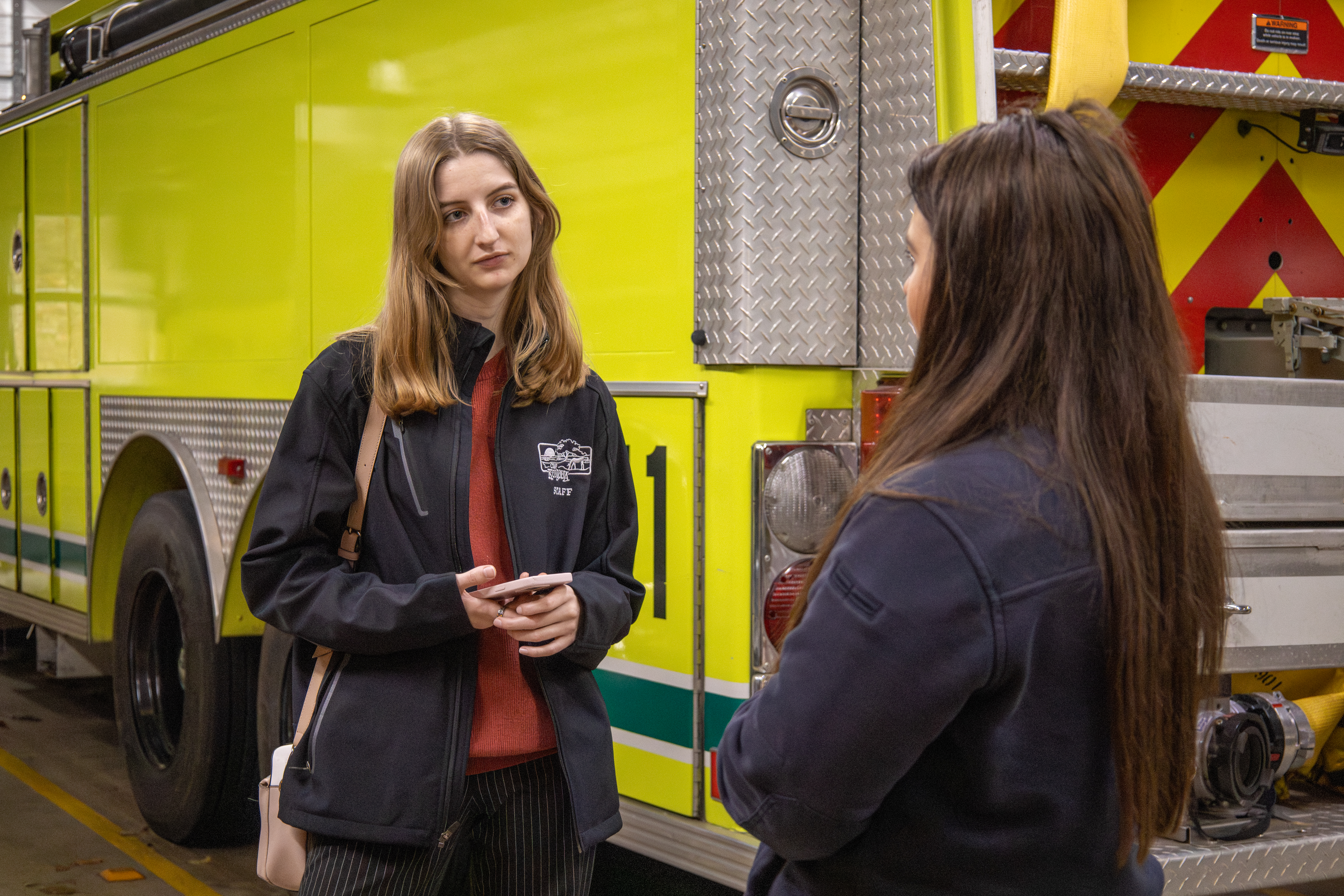
Since my first story, I’ve watched volunteer firefighters show off their equipment, sat
in commission meetings with invested citizens, and listened to residents share their
concerns as I wrote for the Collegedale section of The Southern Accent. Through these
conversations, my love of Collegedale and the people who live here have grown
exponentially. It is a community that is exploding with new businesses, friendly residents
and newsworthy issues and events.
Collegedale deserves a news source that delivers comprehensive, humanizing and
truthful coverage. That is why the Southern Accent has expanded its coverage of
Collegedale into a new publication, Collegedale Community News, to provide a necessary
public service to the City of Collegedale.